
Updated in 2025 with the latest industry insights and guidance based on 20+ years of experience.
What Does a Fashion Designer Actually Do?
When people think of fashion designers, they often imagine catwalks, celebrities and glamorous studios. But while fashion design is certainly a creative career, it’s also highly technical, practical, and business-driven. Whether you’re sketching new silhouettes, liaising with manufacturers, or building a range plan, fashion designers are the minds behind every piece of clothing you see in stores or online.
From start-up streetwear brands to global activewear giants, the role of a designer changes based on category, seniority and context. But at its core, fashion design is about solving creative problems—using shape, colour, material, and form to bring ideas to life.
As someone who has worked in fashion design for over 20 years, I’ve seen the job evolve dramatically. When I started fashion was going digital, moving from hand-drawn designs to CADs. The last few years have seen a transition from 2D to 3D garment modelling and now we are witnessing the arrival of AI-enhanced workflows. This post explores what the job really involves today and how to build a long-term, rewarding career in fashion design.
What Does a Fashion Designer Do Day-to-Day?
The scope of a fashion designer’s responsibilities can vary widely depending on the company, product category and seniority. Designers working for large retailers or global brands will usually specialise in a certain type of product, whereas independent designers or those working for smaller brands often wear many hats. My role at Puma, for example, focused heavily on mens sports leisurewear, while my freelance consultancy work today spans everything from trend research to factory sourcing, garment development and branding support.
Here is a list of typical fashion designer duties:
- Trend and colour research
- Attend trade shows and go on research trips
- Developing design concepts and mood boards
- Sketching designs (either by hand or digitally)
- Pick fabrics, colours and trims
- Creating detailed fashion CADs in Adobe Illustrator or CLO3D
- Building technical specification documents (tech packs)
- Liaising with category managers and design teams
- Attending fittings and overseeing product development
- Collaborating with marketing, buyers and sales teams
Who Employs Fashion Designers?
Fashion designers work across a wide range of apparel sectors and sometimes get involved in footwear and accessories. Some are permanently employed, while others like myself choose a freelance or consultancy-based model. Employers include:
- High street and online retailers
- Luxury brands and design houses
- SMEs and fashion start-ups
- Licensing and private label companies
- Apparel manufacturers and sourcing agencies
I’ve worked for companies like Adidas, Umbro, and Ellesse as well as niche brands like Reflo Golfwear and Moda Active. Each has different priorities, from brand storytelling to technical innovation, which keeps the job fresh and dynamic.

Puma Foundation range for Spring/Summer 2009, including tech packs and CADs for large logo tees, sweat jackets, tank tops, striped polos, and nylon windbreakers
If you’re thinking about becoming a fashion designer or working for a commercial fashion brand, here’s a look behind the curtain. I’ve worked as a fashion designer since the early 2000s, with experience working as a full time designer at large international brands, and now run J Mitchell Design, my own fashion design consultancy in the UK.
Understanding the Role
Designing fashion isn’t just about being creative. A fashion designer must stay on-brand, understand the DNA of the company, and balance newness with commercialit. Most of the time, you’re tasked with designing styles that feel fresh but resonate with your target customer. A commercial designer must design product that they may not personally want to wear, which means researching an understanding the end consumer.
Trend and Market Research
You’ll be expected to research trends from runway shows, trend sites, high streets, and competitor stores. Commercial designers monitor style shifts and adapt these insights into collections. There are a number of trend companies out there that you can access for a fee, like WGSN, that create trend and colour direction.
Product Categories
You might work on menswear, womenswear, or childrenswear, and specialise in categories such as outerwear, jersey, knitwear, or denim. Each area has its own technical requirements and customer expectations. My own personal areas of expertise are sportswear, streetwear and activewear. Designers at small companies are more likely to cover multiple categories, than designers at large commercial fashion businesses.
Seasonal Collections & Direct-to-Consumer
Traditional fashion is split into Spring/Summer and Autumn/Winter, but DTC brands now release smaller drops throughout the year to stay visible. Designers help shape these stories using mood boards, market insights, and collaboration with product managers. When working on seasonal collections for a brand it can become a challenge to design something similar but different season after season. It’s normal for business to move designers into different teams and take on different collections after a few seasons to mix things up. A freelancer will have a lot more diversity working on multiple collections for different brands.
From Concept to CAD
A range plan is often provided for the fashion designer, usually passed to the designer by the product manager or team leader. This will typically list each required style ie one rain jacket, three t-shirts, one overhead hoodie…the designer wil then begin their research before moving on to creating options through hand sketches or digital CADs. Adobe Illustrator is the industry standard for flat drawings, CLO3d or Browzwear are used for creating 3D Cads.
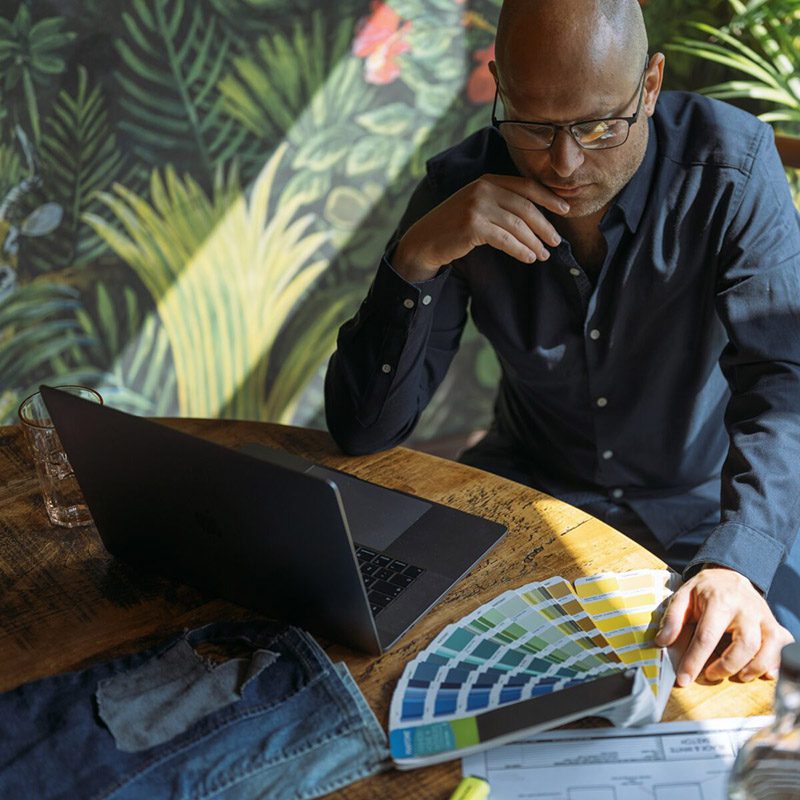
Jonathan Mitchell deep in thought, reviewing CADs, colour palettes and samples – part of his hands-on approach to fashion design.
Tech Packs and Sampling
Each approved style requires a tech pack, this details everything from construction, fabric, trims, and fit. It’s the instruction manual that factories and pattern cutters follow to make samples. These are fitted and reviewed for accuracy and styling. At some large companies this responsibility may fall under the responsibility of the developer. Often designers and developers work very closely to create garments and may even sit together in the office. There can be a lot of crossover between the two roles. In smaller companies it can be up to the designer to also work on the development. A developers role is usually to take the tech packs, check them over, add BOM’s, size charts, liaise with factories, coordinate logistics, quality control, sample development and quality control.
Pre-Production and Presentation
After sample revisions, designers receive pre-production samples and help present them to internal and external sales teams. Explaining design decisions helps marketing teams tell the right product stories. Creating presentations is an important part of the job.
And Then It Starts Again
Once a range is complete and signed off, you’re back to researching for the next season. It’s a fast-moving cycle of creativity and technical problem-solving.
What Qualifications and Skills Do You Need?
Most designers start with a fashion-related degree, but more important than a certificate is your ability to build a compelling, production-ready portfolio. Strong Illustrator CADs, garment construction knowledge, and trend storytelling are vital.
- Adobe Illustrator & Photoshop proficiency
- Strong concept and trend visualisation
- CAD drawing and garment detailing
- Understanding of fabrics, trims and construction
- Communication and presentation skills
- 3D design (e.g., Clo3D, Browzwear) is a plus
- Strong computer and admin skills
What Is the Career Progression for a Fashion Designer?
You might begin your journey as a design intern or assistant, but as your skills and experience grow, so does your scope of responsibility. Typical career steps in fashion design include:
-
Intern Designer
-
Junior/Assistant Designer
-
Midweight Designer / Designer
-
Senior Designer
-
Team Head / Lead Designer
-
Design Manager
-
Design Director
-
Creative Director
The structure can vary depending on company size and region. Smaller brands often operate with flatter hierarchies—usually junior, senior and manager roles—while larger fashion businesses might use more nuanced titles like Senior 1 and Senior 2, or introduce additional team lead roles.
In my own career, I progressed from assistant roles at Moss Bros and Bench to senior and lead positions at brands like Puma and Umbro, before launching my own consultancy. The pace of progression often depends on your ability to manage projects, work cross-functionally and consistently deliver clear, commercial design work.
Fashion Designer Salary Expectations (2025 in the UK)
- Assistant Designer: £20,000 – £308,000
- Designer: £30,000 – £45,000
- Senior/Lead Designer: £45,000 – £65,000+
- Design Manager – £65k – £85k
- Design Director – £85k – £120k+
- Creative Director – £120k+
- Freelancers/Consultants: £250–£550/day (or project-based)
Remote Work and International Opportunities
Designers can now work globally without leaving home. Most of my clients are UK-based, but I’ve supported brands across Europe, the US and Asia. With the right tech setup and experience, you can collaborate with manufacturers and founders anywhere.
FAQs
What qualifications do you need to be a fashion designer?
Most start with a fashion design degree, but a solid portfolio and experience can open doors just as effectively.
Is fashion design competitive?
Yes, but there’s plenty of opportunity if you combine talent, timing and professionalism. Being reliable is just as important as being creative.
Can fashion designers work from home?
Absolutely. Many now do full-time remote design, especially in CADs, 3D, trend forecasting and consulting.
Is freelance fashion design viable?
Definitely, with a good portfolio and a few strong client relationships, it’s a flexible and rewarding path.
Work With Me
At J Mitchell Design, I work with fashion brands at every stage—from trend research to 2D/3D CADs, tech packs, sampling and manufacturing. I specialise in activewear, sportswear, streetwear and sustainable fashion.
Whether you’re launching a collection or need design support on an existing range, I’ll help you build commercially strong, well-made product that people want to wear.


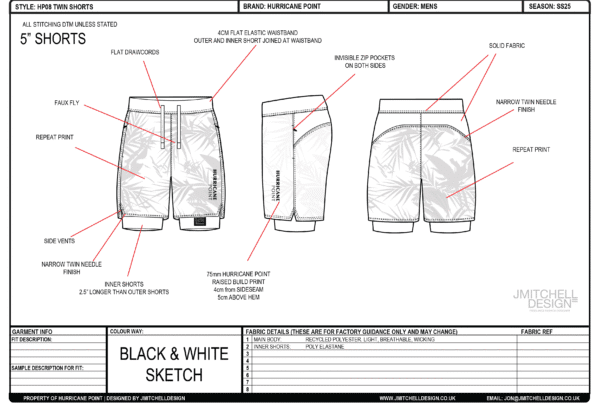


Salaries vary based on location, company size, and how much a business values design. Suppliers and manufacturers often pay less than consumer-facing brands. Generally, the larger or more influential the business, the closer you’ll be to the upper end of these ranges.