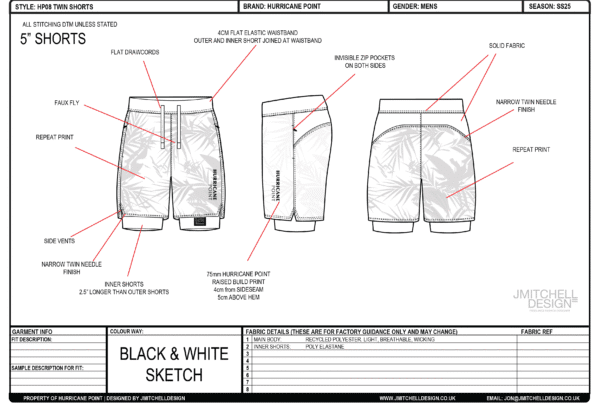
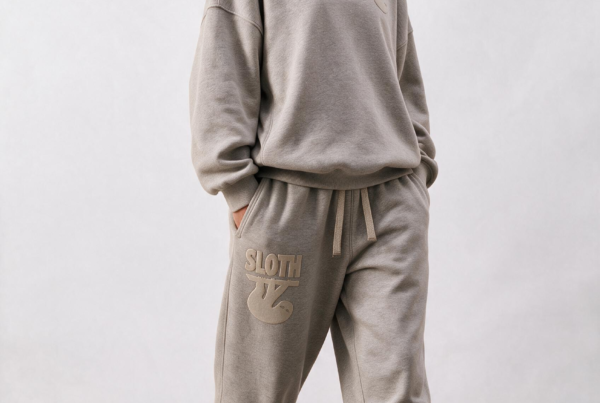
Behind the scenes of a real brief in progress, CADs, fabric swatches and tech pack pages pinned up in the studio.
Every new enquiry I get starts with a version of the same question. What do you actually need from me before we can start?
I wrote recently about how AI generated mockups and 45 page documents are changing the shape of the brief. This time I wanted to look at the actual data. I pulled the anonymised results from 114 client briefing forms submitted to me over the past couple of years, plus three real project proposals stripped of any identifying detail, to show what a properly useful brief looks like and where most fashion start-ups are still missing pieces before they get in touch.
What 114 Real Briefs Actually Show
Every client who reaches out to me fills in a briefing form covering brand vision, target audience, garment categories, manufacturing status, budget and timeline. Looking back across 114 of these, a few patterns stand out, and some of them surprised me.
Seventy percent had logo and branding assets ready to go. That’s a solid majority, and it means most fashion start-ups have at least done the groundwork on identity before approaching a fashion designer.
Only twenty two percent had a manufacturer in place. Nearly eight in ten start-ups come to me before they’ve locked in a factory, which is completely normal at this stage, but it does mean sourcing and factory introduction is a conversation that needs to happen early rather than being an afterthought.
Just under a third had existing brand guidelines or an investor deck to share. That’s not a problem in itself. Plenty of strong projects start without formal documentation. But it does mean the brand story usually has to be talked through rather than handed over as a finished document, which takes time neither side should skip.
Just over a quarter of respondents left the production budget question blank or simply didn’t know their number yet. That’s the stat that matters most. A budget doesn’t need to be precise, but a brief with no budget range at all is a brief I can’t properly scope against.
Where Fashion Start-Ups Usually Get It Right
The parts of the brief people are consistently clear on are product and audience. Across the same 114 responses, the most requested categories were shorts, t-shirts, leggings, hoodies, jackets, sports bras, polos and caps, which tracks with how many of these briefs come from people building activewear, sportswear and streetwear brands rather than broader fashion labels.
Fit and design priorities are usually well articulated too. Performance and function came up most often, followed by comfort, luxury, quality and fit, with sustainability and premium positioning both mentioned by roughly a quarter of respondents. People generally know what their product needs to feel like, even when they haven’t nailed down every other part of the brief.
Sales channels are almost always thought through as well. The overwhelming majority planned to sell through their own ecommerce site, just under half were planning pop up shops or events, and smaller groups were looking at wholesale, marketplaces, department stores or B2B and teamwear routes. Knowing how you intend to sell the product shapes the product itself, and it’s one of the strongest parts of most briefs I receive.
Collection size tends to be sensible too. The median first collection sits at four to five styles, and around three quarters of start-ups are planning somewhere between one and six pieces for a launch range. That’s a realistic starting point. Trying to launch fifteen or twenty styles as a brand new fashion brand is usually a sign the budget and the ambition haven’t been checked against each other yet.
Three Real Projects, Three Very Different Starting Points
Numbers only tell part of the story, so it’s worth looking at how differently a brief can shape a project. These are three real proposals I’ve written, with brand names, figures and identifying details removed.
The first was a premium outerwear and hardware brand building a modular carry system. The founder came with a fully formed brand vision, clear positioning against named benchmark brands, and a strong sense of what the product should and shouldn’t look like. What they didn’t have was a manufacturer or a developer, and the garment itself was complex enough that it needed design, full technical packs, and optional sampling and manufacturing support layered on afterwards. That’s a full multi phase engagement, starting from concept and running all the way through to factory-ready documentation.
The second was an overseas activewear brand with an established factory relationship already in place, a finalised logo and typography, and AI generated concept direction already developed for a six style collection. Because so much groundwork had already been done, the brief for that project was narrow by design. One hero piece needed proper CAD development, the other five styles needed written direction rather than full redesign, and the whole engagement ran to a few weeks rather than months. That’s what a brief looks like when most of the pieces are already in place before a fashion designer gets involved.
The third was a workwear brand building its first collection from nothing. Clear brand vision, a clear customer, and a genuine gap in the market, but no manufacturer, no existing tech packs, and only a working set of reference points. That project needed full CAD development, complete technical packs, and optional sampling and manufacturing support across four styles, run in phases so the brand could pause after each stage if they needed to.
Same starting point, three completely different scopes, because the brief itself was different in each case. That’s the point worth taking from this. A fashion designer isn’t pricing or scoping a garment category. They’re scoping the gap between what you already have and what a factory needs to see.
That gap is also why two brands building the same kind of product can end up with completely different quotes and timelines from the same designer, which understandably confuses people when they compare notes with other founders. It’s rarely about one project being harder to design than the other. It’s about how much of the groundwork, whether that’s brand identity, factory relationships or technical documentation, still needs to be built before a garment is ready for a factory to look at. A brand starting from scratch is paying for more of that groundwork. A brand that walks in with most of it already sorted is paying mainly for the design decisions themselves.
This is also why a rough budget number matters so much more than a finished one. I don’t need an exact figure to start a conversation, but I do need to know roughly what range you’re working in, because it immediately tells me whether we’re scoping a narrow, bounded piece of work like the activewear brand above, or a full design and technical development project like the other two. Without that, the first few conversations end up guessing at scope rather than actually planning it.
What This Means for Your Brief
None of this is about gatekeeping. Plenty of the strongest projects I’ve worked on started with gaps in exactly the areas covered above, and that’s normal at the start-up stage. The point of a proper brief isn’t to arrive with everything finished. It’s to be honest about what’s missing, so the first conversation can actually plan around it instead of assuming it’s already sorted.
If you’re a fashion brand or start-up preparing to approach a fashion designer, the data above points to a fairly short list of things worth having ready. A clear sense of your product category and audience, which most people already have. A realistic first collection size, ideally in the four to six style range rather than an entire wardrobe. An honest answer on whether you have a manufacturer, even if that answer is no. And a budget range, even a rough one, because a brief with no number attached is the single biggest thing that slows a project down before it starts.
None of this needs to be a polished document. If you want a fuller sense of what a proper brief involves and what happens once you’ve handed it over, it’s worth reading through fashion design services or fashion start-ups before you get in touch, so you know roughly what to expect from the process on both sides.
I’ll keep pulling data like this from real briefs as I go, because it’s a more honest picture of what fashion start-ups actually bring to a project than any generic checklist could give you. If you’re building a brand and want to talk through what your own brief should look like, get in touch as a freelance fashion designer or explore the JMD x Fashion Consultancy and we can work out what you already have and what still needs filling in.
FAQ
What information does a fashion designer need to start a project?
At minimum, a fashion designer needs your product category, target audience, a sense of collection size, whether you have a manufacturer, and a budget range. Logo assets, brand guidelines and reference images all help, but they aren’t essential to get started.
Do I need a manufacturer before I brief a fashion designer?
No. In a sample of 114 client briefs, only 22 percent had a manufacturer in place at the briefing stage. Most fashion start-ups approach a designer first and sort factory sourcing and introductions as part of the wider process.
How many styles should a first collection include?
Across the same client data, the median first collection was four to five styles, with around three quarters of respondents planning between one and six pieces. A smaller, focused range is usually more achievable than a full collection for a first launch.
What if I don’t know my production budget yet?
A rough range is enough. Around a quarter of briefs left this blank, and it’s consistently the detail that slows a project down most, because scope and cost decisions can’t be made properly without at least an approximate number to work against.
Does every fashion design brief need a full technical pack from day one?
No. How much a project needs depends entirely on what’s already in place. A brand with an established factory and finished branding might only need design direction for a hero piece, while a brand starting from scratch usually needs full CAD development and tech packs across every style.
Jonathan Mitchell is a freelance fashion designer with over 20 years of experience working with global brands and start-ups across activewear, sportswear and streetwear. From CADs and tech packs through to sampling and manufacturing support, J Mitchell Design offers a full fashion design service. Explore services at jmitchelldesign.co.uk or visit the JMD x Fashion Consultancy page to find out more.