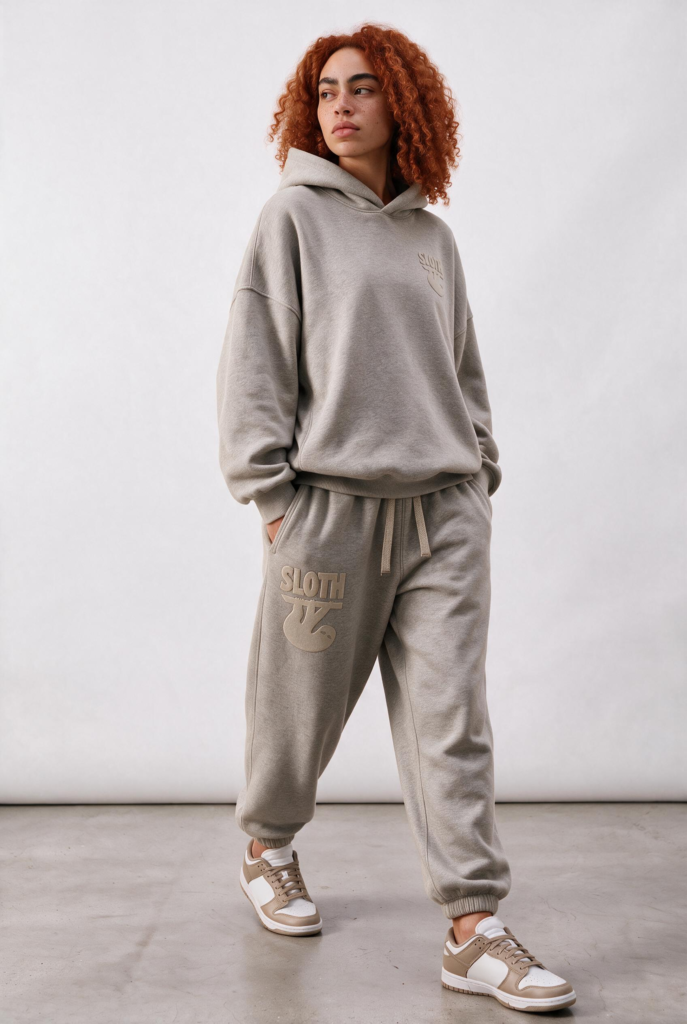
An AI generated mockup for the Sloth x JMD AW26 collection. Useful for direction, but it still needs redrawing as technical flats before it can be sampled.
The way I get briefed as a fashion designer is changing, and it has happened fast.
I’ve been doing a lot of fashion consultations recently, and there’s a real shift in how fashion start-ups bring me their ideas. It’s not subtle either. Over nine years as a freelance fashion designer, I’ve watched the brief evolve from a phone call and a rough sketch to something far more polished, and not always more useful.
The Brief Used to Be a Phone Call
For most of my career, a new client would get in touch with a concept. Usually that meant a short phone call or a few paragraphs in an email. A name, a rough idea of the product, maybe a couple of reference images pulled from Pinterest or a competitor’s website. It wasn’t polished, but it was honest. You could hear or read exactly what the client did and didn’t know.
Now the average brief lands very differently. It usually comes with AI generated mockups attached, plus a supporting document to match. I got sent one recently that ran to 45 pages. After I’d read the whole thing and broken it down, there were about five lines of usable information in there. Everything else was padding: restated goals, generic market commentary, and a lot of language that sounded confident without actually saying much.
This isn’t a one off. It’s becoming the norm for how fashion start-ups approach a first brief, and it’s worth talking about openly, because it changes what I need from a client to do my job properly.
What AI Generated Mockups Actually Get Right
I want to be clear about this because it’s easy to sound dismissive of AI tools, and that’s not where I’m coming from. The mockups themselves are properly useful. They’re never the finished article, and they shouldn’t be treated as one, but for direction and concept they do a good job. A client can show me silhouette, colour placement, a rough sense of styling, and general mood far quicker than they could describe it in words. That saves time on both sides, and it means our first conversation starts from something visual rather than a blank page.
If you’re a fashion brand or start-up putting a brief together, using AI tools to generate a moodboard or a rough mockup before you speak to a fashion designer is a good habit. It just can’t be the whole brief.
The 45 Page Document Problem
Where things fall down is the accompanying documentation. Most of the AI generated waffle exists because the client hasn’t fully understood the information themselves. They’re leaning on what the AI told them about their target market, their positioning, or their competitors rather than their own grasp of what they actually want and need.
That’s the real problem. Not the length of the document, but what it represents. A 45 page report reads as thorough, but if the client can’t explain the five key points from memory, the document isn’t doing its job. It’s a symptom of skipping the thinking rather than a replacement for it.
A short, honest email telling me what the client really knows and wants is worth more to me than 45 pages of generated text. If you know your target customer is women aged 25 to 35 who train three times a week and want performance activewear that doesn’t look like performance activewear, tell me that in one sentence. I don’t need the AI’s paraphrase of a market report to get there.
What I Still Need From You, Whatever the Brief Looks Like
None of this has changed with AI tools, and it isn’t going to:
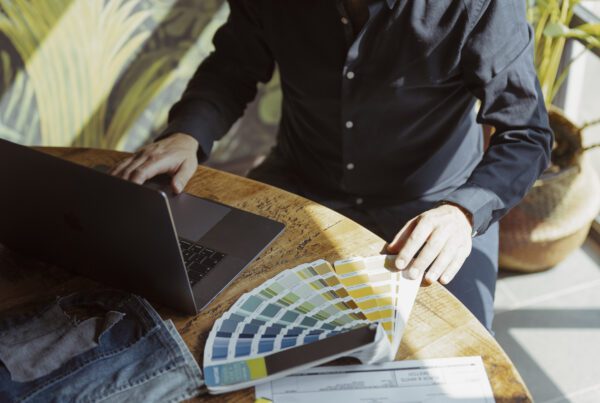
Real fabric swatches, not a description of one. I need to feel the weight, the stretch, the finish. A written spec or an AI generated render can’t tell me how a fabric drapes or performs.
Proper market research based on your own understanding of your customer, not a generated summary of a market you haven’t actually studied.
A brand story that explains why this product exists and who it’s for.
A marketing strategy, even a rough one, so the products we develop actually have a route to a customer once they exist. I’ve written before about why fashion brands need more than a great product, and this is the same issue showing up earlier in the process.
If any of these five feel unfamiliar, it’s worth reading through fashion design services to see how a proper brief fits into the wider process before you get in touch.
A costed budget, so we’re designing something that can actually be produced and sold at a realistic price point.
If those five things are missing, the brief isn’t ready, no matter how many pages of AI generated context sit around them.
The Growing Misconception: AI Mockup Straight to Tech Pack
There’s a misconception growing around what happens after the AI generated designs land, and it’s the part of this shift I want start-ups to understand properly. I’m now getting asked to turn AI mockups straight into tech packs, and I’m getting fewer requests for actual design input along the way.
That’s a mistake, and it’s one that costs brands money later rather than saving it now.
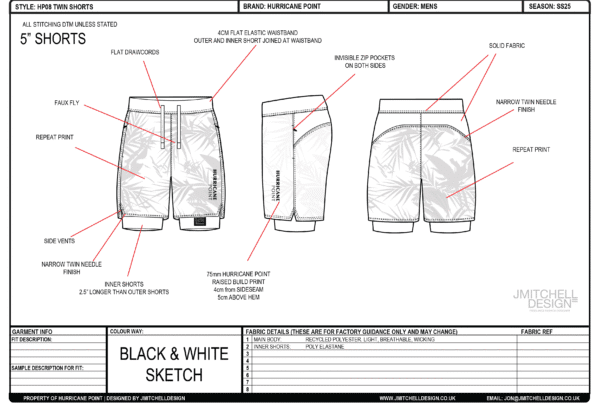
To get from an AI generated image to a usable tech pack, everything needs to be redrawn properly as vectors, so the colours, proportions and positioning of every detail can actually be edited and specced for a factory. AI mockups are rarely built to scale, rarely consistent between front and back views, and often contain construction details that don’t actually make sense on a real garment. A factory can’t work from a picture that looks right. They need flats that are technically correct.
What Actually Happens Between an AI Mockup and a Factory Ready File
It’s worth walking through what redrawing an AI mockup actually involves, because most clients haven’t seen this part of the process before.
An AI generated image gives you one flat view, usually at one angle, with lighting and shading baked into the image itself. A factory can’t work from that. As a streetwear designer or activewear designer, I need a clean front and back flat, drawn to scale, with every seam, stitch line, trim and hardware detail shown separately from the artwork or colourway. That means rebuilding the garment from scratch as a vector file, checking that proportions actually make sense on a body, and making decisions the AI never had to make, like how a zip actually sits at a collar, or whether a panel line is even physically sewable.
This is also where a lot of AI generated designs quietly fall apart. Details that look convincing in a render, an odd cuff, a graphic that wraps around a seam in a way that doesn’t exist in garment construction, a colour blocking pattern with no clear panel lines, often can’t be produced as shown. Someone has to spot that and either solve it or flag it back to the client before it reaches a factory and causes a delay, or worse, a sampling cost that didn’t need to happen.
This is the part of the job that hasn’t changed, whatever generated the original image.
Why the Design Phase Hasn’t Disappeared
The design phase might be getting shorter thanks to AI tools speeding up the early concept stage, but right now it hasn’t disappeared from the process, and I don’t think it will for a while yet. Working with an experienced fashion designer to refine designs, sense check merchandising, and build in commercial viability is what takes a concept from an AI generated image to something a factory can actually produce and a customer will actually buy.
This is the same work I’ve always done as a freelance activewear designer and freelance sportswear designer, whether the starting point is a hand sketch, a reference garment, or an AI generated mockup. The tools at the front of the process have changed. What happens between concept and production hasn’t, at least not yet.
What This Means If You’re Briefing a Fashion Designer in 2026
If you’re a fashion start-up preparing to brief a fashion designer, use AI tools for what they’re good at. Generate a moodboard. Rough out a mockup to show direction. Use them to help you organise your own thinking before a call, not to replace the thinking itself.
Then keep the actual brief short and honest. Tell me what you know, tell me what you don’t, and bring real fabric references, a genuine understanding of your customer, and a realistic budget. That combination, a clear visual starting point plus an honest, well understood brief, is what actually moves a project forward quickly. A 45 page document with five usable lines in it does the opposite.
I’ve watched fashion design evolve a lot over my career, and I’m curious to see where this goes next. If you’re a fashion start-up and want help turning a concept, AI generated or otherwise, into something production ready, get in touch as a freelance fashion designer before you brief anyone else.
FAQ
Can AI generated mockups replace a fashion designer?
No. AI mockups are useful for early direction and concept, but they aren’t built to the technical accuracy a factory needs. A fashion designer still has to redraw designs as proper vector flats and refine construction, fit and commercial viability before a product is production ready.
Can a fashion designer turn my AI generated design into a tech pack?
Yes, but it’s not a simple copy and paste job. Every element of an AI generated mockup needs to be redrawn as clean, editable vector artwork so colours, proportions and construction details can be specced accurately for manufacturing.
What should I include when I brief a freelance fashion designer?
A strong brief includes real fabric swatches, genuine market research based on your own understanding of your customer, a clear brand story, a rough marketing strategy, and a costed budget. Visual references or AI generated mockups help too, but they should support the brief, not replace it.
Do I still need real fabric swatches if I have AI generated images of my product?
Yes. An AI image or written description can’t convey how a fabric actually drapes, stretches or performs. A fashion designer needs to handle the real material to design and spec it properly.
How has AI changed the way fashion start-ups brief designers?
Briefs now often arrive with AI generated mockups and long supporting documents rather than a short call or email. The mockups are properly helpful for direction, but longer documents don’t always mean a clearer brief, and a short, clear summary of what you actually know is usually more useful than dozens of AI generated pages.
Jonathan Mitchell is a freelance fashion designer with over 20 years of experience working with global brands and start-ups across activewear, sportswear and streetwear. From CADs and tech packs through to sampling and manufacturing support, J Mitchell Design offers a full fashion design service. Explore services at jmitchelldesign.co.uk or visit the JMD x Fashion Consultancy page to find out more.