
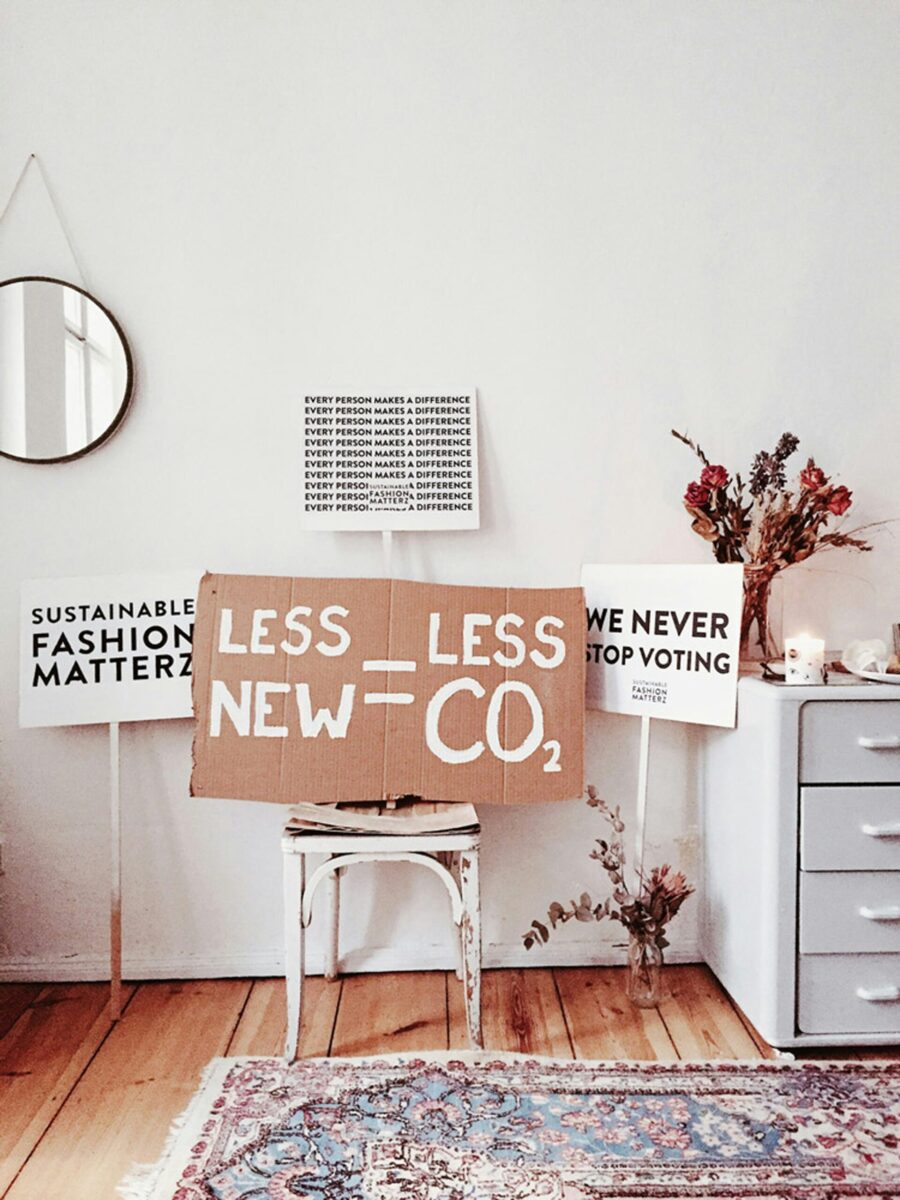
Photo by Cherie Birkner on Unsplash
What does sustainability mean in terms of the fashion industry?
Fashion can be a very aggressive form of consumerism. Ever-changing fashion trends can lead to people buying many items of clothing which they may only wear for a short period before replacing with a similar newer garment. The traditional fashion business model is set up to sell clothing in seasons. Spring/summer and autumn/winter. Each season brings a new collection for fashion businesses. Depending on climate, the collections in general are tailored to suit the weather outside, with warmer collections for winter and cooler collections for summer. To get people to buy new pieces season after season brands will update their collections year after year with new prints and details.
In more recent times we have seen companies create a more competitive form of this model, now dubbed ‘fast fashion’. The Fast fashion business model sees companies following multiple trends, dropping many collections each season and making garments as affordable as possible, on the premise that they will be replaced and updated frequently by the consumer. It causes extensive damage to the planet, exploits workers, and harms animals.
So what is sustainable fashion?
In recent years the the usage of the words sustainable and sustainability and also the term circular economy have become popularised, not just in the world of fashion but in business in general.
The idea of sustainability in fashion has been around for quite some time. Back in the early 2000s, it started to gain some traction within the fashion industry with brands looking at new fabrics such as bamboo and hemp which were far easier to cultivate compared to traditional fabrics like cotton and wool. Companies started to introduce these new fabrics in their collections but the prices were high and most consumers had not yet become aware of issues being caused by traditional fabric manufacturing.
An area of concern that made headlines was the issues involving bad employment practices in factories. Factory employees are treated unfairly, receiving low wages and working long hours whilst housed in poor conditions. These factories became known as Sweatshops. Sweatshops are a byproduct of brands forcing down prices at retail, to do this they have to procure products at low prices which means paying factories as little as possible. Initially, sweatshops were something found in third-world countries but more recently, with high shipping costs and currency devaluation, they are found all over, including towns close to home.
Sustainable fashion is a way of dealing with issues created by the fashion industry. It calls for fair wages to be paid to all employees. It looks at the fashion supply chain, where the fabrics and components come from, how they are made and how to minimise their impact on the environment. It deals with how products are consumed, moving away from fast fashion to slow fashion, looking to create products that are thoughtful and longer lasting. Sustainability is also about recycling and reusing fashion products which have already been purchased so that they don’t end up in landfills.

Sustainable Golfwear by reflo https://reflo.com/
Where is sustainable fashion now?
In 2024 sustainability Is at a crossroads. It has become a trend and buzzword which is far from ideal. Now that sustainable fashion has gained traction in the marketplace, businesses which had been seen as the problem have jumped on board and started using it as a marketing opportunity. The term ‘greenwashing’ has been coined to explain the issue of businesses falsifying their sustainable credentials to increase sales and make themselves look good. In some ways, this is a good thing as it’s making sustainability more mainstream and it’s helping the industry as a whole. With businesses auditing their supply chains and paying fair wages we have also seen an increase in products being produced as sustainable which when scrutinised fall far below the standards required from them. It is difficult for the consumer to understand the difference in levels of sustainability allowing businesses to profit using sustainability as a marketing tool. We are in danger of the term sustainable becoming saturated and losing its impact.
At the same time, we are observing conscious brands and fashion collections taking market share across various sectors of the fashion industry. We are seeing years of research and development which has led to amazing innovations within the textile industry and advances in label and trim development. This is allowing businesses to produce products with a far lower carbon footprint and helping to combat environmental issues created by garment manufacturing.
The consumer is better educated in sustainable practices allowing them to make informed choices but economic uncertainty has meant that the consumer is facing a dilemma. They want to purchase products sustainably with the knowledge that they are aiming to be a part of the solution rather than a part of the problem. They also know that a good product will last longer meaning better value in the long term but a better product means a higher initial investment and the consumer is not always financially able to make the sustainable choice.
Where does sustainability go from here?
Ideally, sustainable practices will continue to push and evolve the industry. The aim is for sustainability to become a standard everyday part of the fashion industry so that people to no longer have to talk about it’s pros and cons. It will no longer be down to the consumer to choose between buying sustainable fashion or buying non-sustainable products. The industry and legislation need to have evolved to the point where sustainable practices are the only option. Taking accountability away from the consumer and resting on the shoulders of the industry.
The fashion industry needs to avoid old problems seeping back and greenwashing bringing fatigue to the sustainable movement. For the sake of the environment and humanity, we can’t allow profits to be more important than quality and fair practice. There needs to be room for sustainability to be affordable for all and for companies to create sustainable fashion whilst achieving healthy profit margins.
This article was written by Jonathan Mitchell.
Originally from Brighton Jonathan now lives in the beautiful Huddersfield countryside where he works runs J Mitchell Fashion Design. He is a freelance fashion designer with over 20 years of commercial fashion industry experience.


